
technology guide

How VRLA AGM Batteries Work in Standby Power Systems

A VRLA AGM battery immobilizes electrolyte in a glass-mat separator and is designed for gas recombination under controlled charging, but it still requires correct voltage, temperature, protection, ventilation, inspection, and replacement planning.

Buyer note: use this guide to structure the first technical discussion. Final sizing, compatibility, document scope, and commercial terms are confirmed for the actual project.

Key takeaways

  • Valve regulated does not mean condition-free or installation-free.
  • Capacity depends on discharge rate, end voltage, temperature, and condition.
  • Temperature and charging control strongly influence standby service.
  • Design float life and contractual warranty are different statements.

VRLA AGM construction in plain language

In an AGM battery, the separator absorbs the electrolyte and keeps it in close contact with the plates. The valve-regulated design supports internal gas recombination during normal controlled charging while providing a pressure-relief path for abnormal conditions.

  • Electrolyte is immobilized in the absorbent glass mat.
  • The enclosure is valve regulated rather than an open flooded-cell arrangement.
  • Installation and charging must still follow the exact product instructions.

Why the Ah rating needs a time rate

A capacity label is tied to test conditions, including discharge duration and end voltage. The same battery cannot be assumed to deliver its long-rate Ah value during a much shorter, higher-current UPS discharge.

  • Use constant-power data for loads specified in watts.
  • Use constant-current data only when it matches the design method.
  • Apply the correct end voltage, temperature, aging, and redundancy assumptions.

Charging and temperature control

The charger must match the battery system voltage and approved float, boost, current, and temperature-compensation settings. Persistent temperature or voltage errors can change available capacity and service life.

  • Verify charger settings against the exact model manual.
  • Monitor room and battery temperature where the application requires it.
  • Allow for heat, ventilation, spacing, and alarm response.

What a standby bank design must include

A complete bank design covers series and parallel arrangement, protection, cable drop, rack loading, inspection, monitoring, test method, replacement criteria, handling, and end-of-life responsibility.

  • Avoid mixing age, model, or condition without an approved design basis.
  • Document torque, inspection, cleaning, testing, and alarm procedures.
  • Treat design float life as conditional reference data, not warranty.
Related products

Compare relevant published records

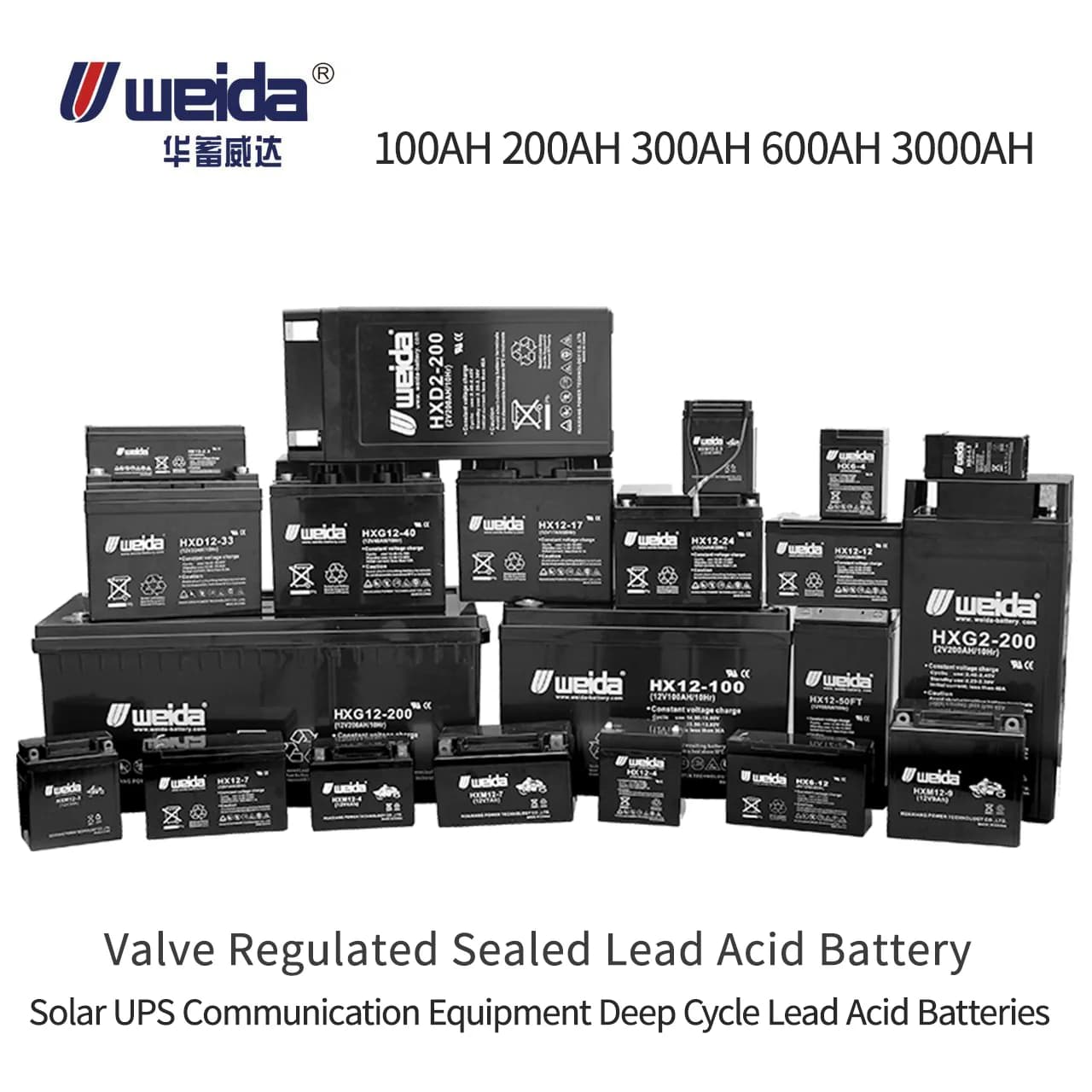
HX 12 V VRLA AGM Battery Series

HX 12 V VRLA AGM

Six verified 12 V VRLA AGM models spanning 7 Ah to 250 Ah, with capacity-rate, mass, and conditional design float-life data.

HX12-7
12 V, 7 Ah at 20HR, 2.05 kg
HX12-9.2
12 V, 9.6 Ah at 20HR, 2.65 kg
HX12-12
12 V, 12.9 Ah at 20HR, 3.45 kg

Related applications

Put the selection method into context

Frequently asked questions

What buyers ask before specifying a battery system

Is VRLA design float life a warranty period?
No. Design float life is a reference value under stated float-service conditions. Actual service life depends on temperature, charging, discharge depth, frequency, installation, and maintenance, while warranty is a separate contractual term.
What warranty applies to the products?
Warranty terms are model- and contract-specific. Ask for the written warranty supplied with the exact quotation; design life, cycle data, and warranty are different concepts and must not be treated as interchangeable.
How should I choose between LiFePO4 and VRLA batteries?
Choose from the actual duty cycle, space and weight constraints, charging strategy, temperature conditions, maintenance plan, expected replacement interval, and total project cost. Chemistry alone does not determine the correct system.
How are batteries prepared for international shipment?
The required packaging and transport documents depend on battery chemistry, model, quantity, transport mode, and destination. Shipment planning begins only after those details are confirmed for the specific order.

Use the guide to prepare a clearer RFQ

Share the actual project data and identify assumptions that still need engineering confirmation.