
selection guide
LiFePO4 vs VRLA
Choose LiFePO4 or VRLA from the duty cycle, power, usable energy, charging, temperature, weight, space, maintenance, system integration, replacement plan, and total project cost—not a chemistry slogan.
Read guide →Response target: within 12 hours for project inquiries
Application / Motive power
Forklift battery projects require truck-level compatibility and a shift-by-shift energy and charging plan before chemistry or capacity is selected.
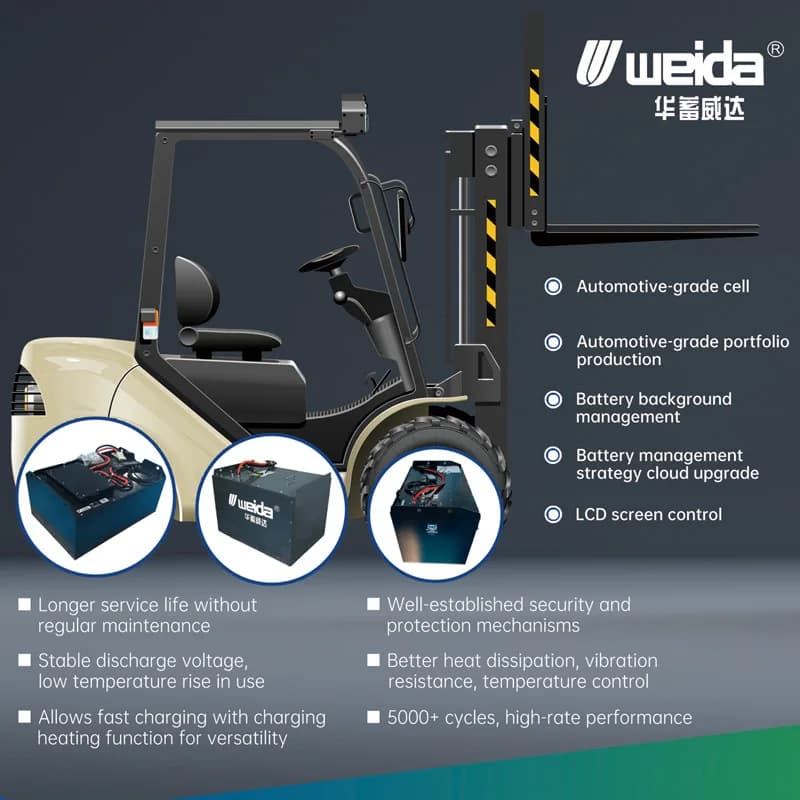
Forklift battery projects require truck-level compatibility and a shift-by-shift energy and charging plan before chemistry or capacity is selected.
A motive battery is part of the truck's weight, electrical, communications, and thermal system. Compartment, counterweight, connector, controller, charger, shift duty, break opportunities, and site temperature all constrain a safe conversion.
Build a truck inventory and duty profile, record existing battery and charger data, then define energy per shift and available charging windows. Validate physical fit, weight, current, connectors, communications, thermal behavior, and charger coordination at model level.
A useful technical brief describes the operating problem before naming a product. Follow the steps below so the proposal can be sized against real loads, constraints, and operating priorities.
Technical reading
Choose LiFePO4 or VRLA from the duty cycle, power, usable energy, charging, temperature, weight, space, maintenance, system integration, replacement plan, and total project cost—not a chemistry slogan.
Read guide →A useful BESS RFQ states the operating objective, site data, power, usable energy, duration, electrical interface, environment, safety requirements, scope split, documents, and acceptance criteria.
Read guide →Frequently asked questions
Send real load and site inputs. The application context will stay attached to the inquiry.