
selection guide

LiFePO4 vs VRLA Batteries: How to Choose for a B2B Project

Choose LiFePO4 or VRLA from the duty cycle, power, usable energy, charging, temperature, weight, space, maintenance, system integration, replacement plan, and total project cost—not a chemistry slogan.

Buyer note: use this guide to structure the first technical discussion. Final sizing, compatibility, document scope, and commercial terms are confirmed for the actual project.

Key takeaways

  • Compare complete battery systems at the same usable duty.
  • Charging and controls differ materially between system architectures.
  • A lighter or higher-cycle chemistry is not automatically compatible with existing equipment.
  • Model replacement, downtime, service, and end-of-life as well as purchase cost.

1. Define the duty before comparing chemistry

Standby float service, daily cycling, motive power, solar buffering, and short-runtime UPS loads stress batteries differently. State power, usable energy, discharge depth, frequency, recharge time, reserve, and temperature first.

  • Operating mode and annual cycle pattern
  • Continuous and peak power
  • Required usable energy and end-of-discharge condition
  • Charge source, recharge time, and unavailable states

2. Compare the complete electrical interface

A replacement must match the DC voltage window, charge profile, current, protection, fault behavior, BMS or monitoring, communications, connector, cable, and host-equipment requirements.

  • Do not treat nominal voltage as full compatibility.
  • Check charger and inverter approval for the exact battery configuration.
  • Review fault current, isolation, fusing, contactors, and shutdown behavior.

3. Compare physical and environmental constraints

Weight, footprint, rack or compartment, ventilation, heat, low temperature, ingress, vibration, lifting, transport, service access, and local requirements can eliminate an otherwise attractive option.

  • Installed dimensions and mass, not only cell energy density
  • Site ambient and thermal-management needs
  • Mechanical restraint, access, and service tasks
  • Transport documentation and destination constraints

4. Compare lifecycle cost with explicit assumptions

A fair cost comparison uses the same usable duty and documents equipment, charger or inverter changes, installation, maintenance, energy losses, replacement, downtime, service, and disposal assumptions.

  • Initial battery and balance-of-system cost
  • Integration, controls, charger, rack, and installation changes
  • Maintenance, monitoring, replacement labor, and downtime
  • Expected use profile and end-of-life responsibility
Related products

Compare relevant published records

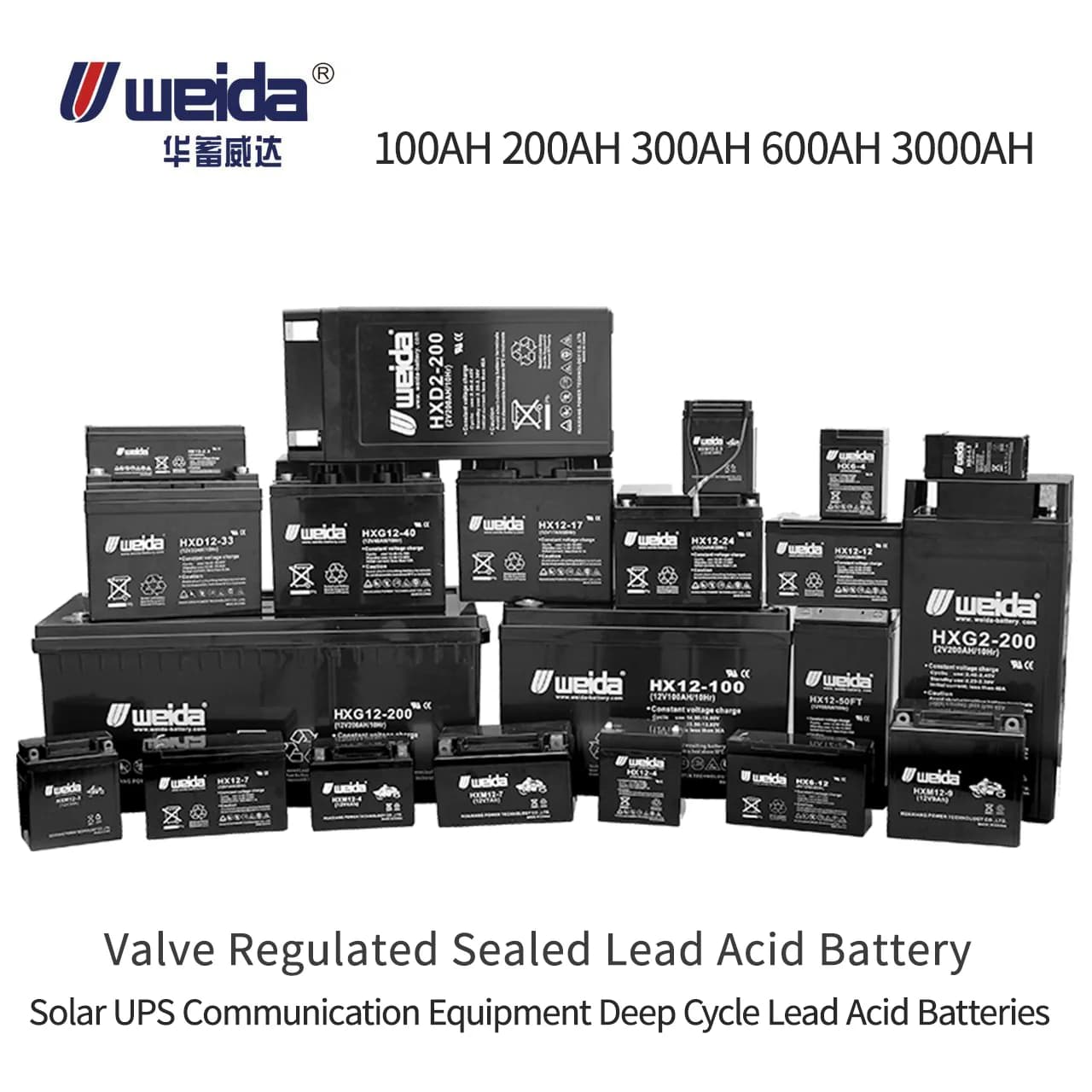
HX 12 V VRLA AGM Battery Series

HX 12 V VRLA AGM

Six verified 12 V VRLA AGM models spanning 7 Ah to 250 Ah, with capacity-rate, mass, and conditional design float-life data.

HX12-7
12 V, 7 Ah at 20HR, 2.05 kg
HX12-9.2
12 V, 9.6 Ah at 20HR, 2.65 kg
HX12-12
12 V, 12.9 Ah at 20HR, 3.45 kg

Related applications

Put the selection method into context

Frequently asked questions

What buyers ask before specifying a battery system

How should I choose between LiFePO4 and VRLA batteries?
Choose from the actual duty cycle, space and weight constraints, charging strategy, temperature conditions, maintenance plan, expected replacement interval, and total project cost. Chemistry alone does not determine the correct system.
Is VRLA design float life a warranty period?
No. Design float life is a reference value under stated float-service conditions. Actual service life depends on temperature, charging, discharge depth, frequency, installation, and maintenance, while warranty is a separate contractual term.
What warranty applies to the products?
Warranty terms are model- and contract-specific. Ask for the written warranty supplied with the exact quotation; design life, cycle data, and warranty are different concepts and must not be treated as interchangeable.
Which certifications are available?
Certification scope varies by model and destination. Request the current certificate and test-report package for the exact quoted model; legacy or expired certificates are not presented as current product credentials.

Use the guide to prepare a clearer RFQ

Share the actual project data and identify assumptions that still need engineering confirmation.